 ENG
ENG
 POL
POL

The effect of Codex Alimentarius standards on national legal orders in the context of European Union membership on the example of Poland and Slovakia

 https://doi.org/10.48269/2451-0807-sp-2024-1-05
Abstract
Food safety, i.e. the quality of food products related to health protection, is no longer exclusively the domain of national law. After the establishment of the WTO, it can be said that it belongs to the area of international cooperation, which can be called global food safety management. The central place here is occupied by the joint body of FAO and WHO – the Codex Alimentarius Commission. Its standards are not soft law in the WTO regime because they were “hardened” in a framework of the agreement on the application of sanitary and phytosanitary measures. Taking this into account, it is worth considering the place of these standards in national legal systems. For this purpose, this article uses a comparison of Polish and Slovak regulations in the context of EU membership and, therefore, the EU food law. The conclusions stated that both Poland and Slovakia are obliged to incorporate Codex Alimentarius standards, which was forgotten by the national institutions of these countries. These standards are properly implemented within EU instruments, but this does not exempt countries from an appropriate approach to Codex Alimentarius, taking into account the existence of the Code. However, this is a problem both in the information and educational spheres.
Keywords:
food safety , Codex Alimentarius , European Union , Poland , SlovakiaDownload files
Citation rules
Cited by / Share




Licence

This work is licensed under a Creative Commons Attribution-NonCommercial-NoDerivatives 4.0 International License.
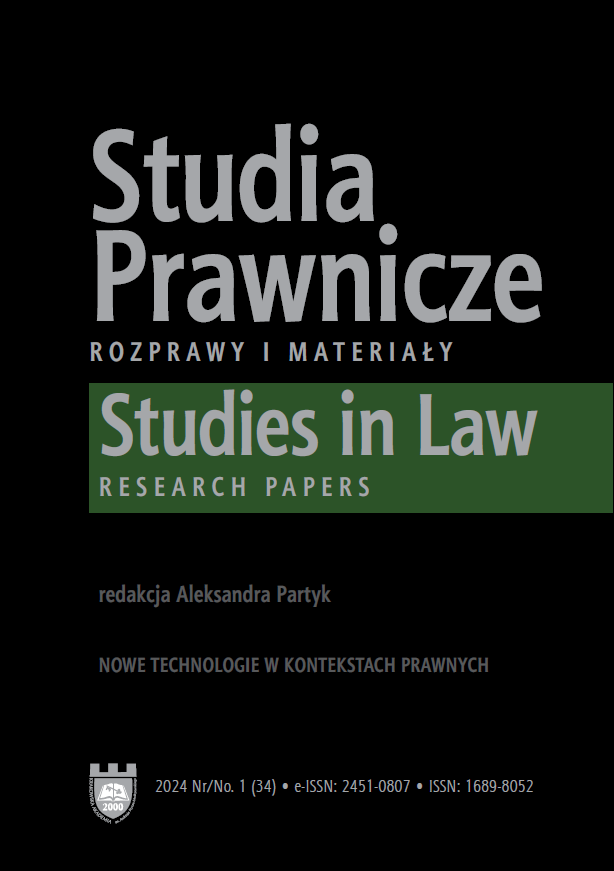
Vol. 34 No. 1 (2024)
Published: 2024-06-13
This work is licensed under a Creative Commons Attribution-NonCommercial-NoDerivatives 4.0 International License.